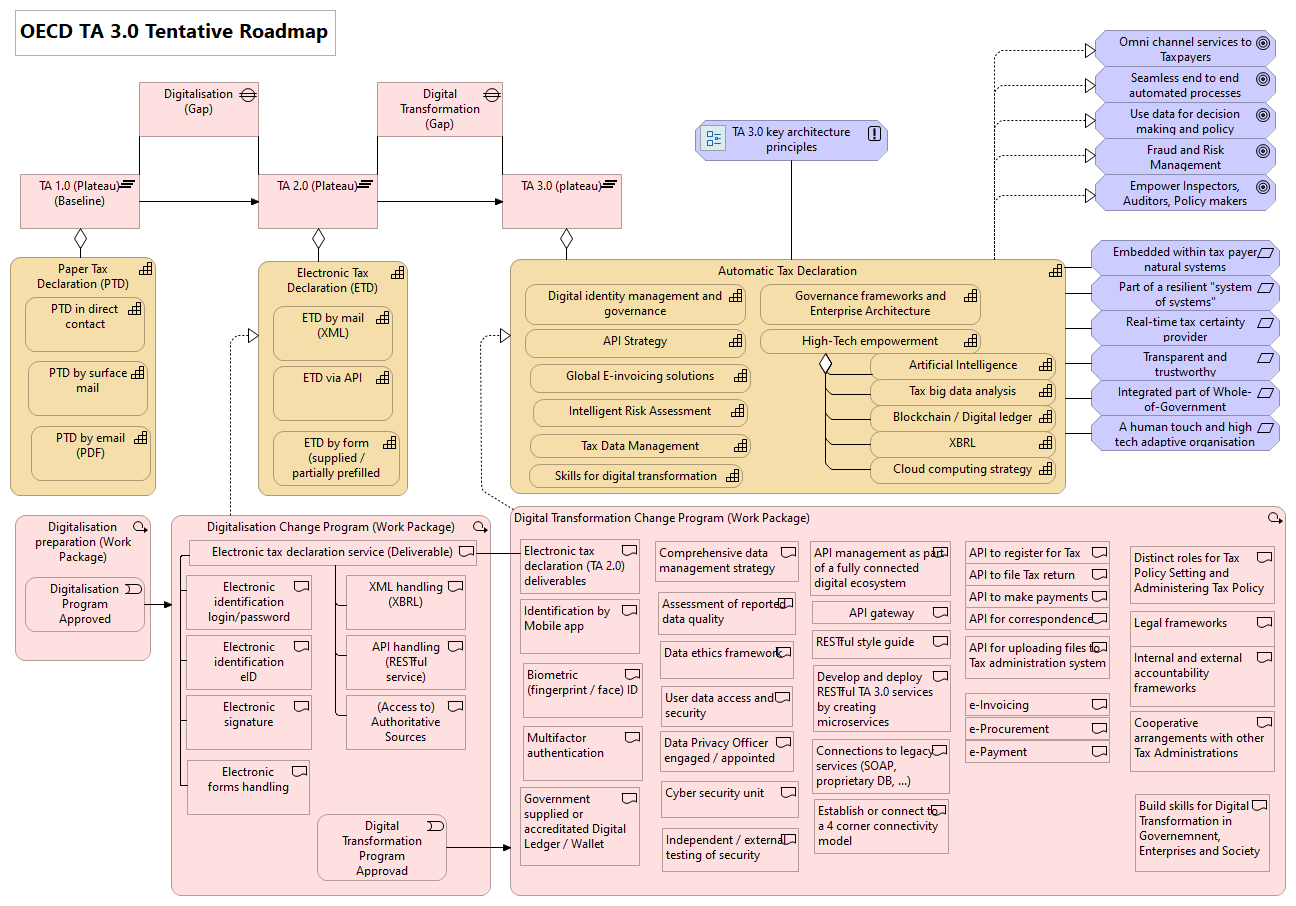
The TA 1.0, 2.0 and 3.0 vision is laid out in document:
OECD (2020), Tax Administration 3.0: The Digital Transformation of Tax Administration, OECD, Paris.
http://www.oecd.org/tax/forum-on-tax-administration/publications-and-products/tax-administration-3-0-the-digital-transformation-of-tax-administration.htm
In this vision, the goal to be reached is termed Tax Administration 3.0 to emphasise the nature of the paradigm shift that it involves.
Using this terminology,
Tax Administration 1.0 can be characterised as largely paper-based with many
manual and siloed processes.
As taxpayers and the whole economy go increasingly digital, a host of new
opportunities has arisen for the use of digital data and analytical tools by tax administrations, including
through joining-up with other parts of government, the private sector and internationally. This is leading
to improvements in the efficiency and effectiveness of tax administration processes for taxpayers and the
administration in many jurisdictions in what might be termed Tax Administration 2.0, sometimes referred to
as “e-administration”.
In Tax Administration 3.0, as more interconnections become possible between the different systems that taxpayers use to run their
businesses, undertake transactions and communicate – their “natural systems”- the more it becomes possible
to move taxation processes into these systems, subject to appropriate assurance. This digital transformation
– Tax Administration 3.0 - has the potential to build-in compliance in an increasing number of areas, to move
taxation closer to taxable events and to significantly reduce the burdens that can arise from using different
processes for taxation to those used in taxpayers’ daily lives and businesses. As these opportunities increase,
it may be possible to make significant inroads into the structural limitations of current tax administration
which can lead to persistent tax gaps, large amounts of uncollected tax debt and continuing, and in some
areas growing compliance burdens.